


Core Differences Between RS232 and RS485 Communication Interfaces for Electronic Scales
Daicy 2026-04-18 18:02:20
1. Technical Principle: The Root of Core Differences Between the Two Electronic Scale Interfaces
The essential difference between RS232 and RS485 communication interfaces for electronic scales lies in the different ways of data transmission, which also directly determines their performance and applicable electronic scale scenarios. We will decompose it for you in popular language:
1. RS232 Interface: The "Standard Communication Configuration" for Electronic Scales
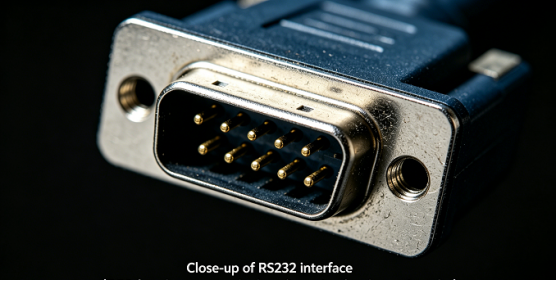
RS232 is the most widely used traditional serial communication interface, and also the standard communication configuration for most commercial electronic scales, precision electronic scales, and household electronic scales on the market. It adopts a "single-ended signal transmission" mode. Simply put, it completes electronic scale data transmission through three lines: TX (transmit line), RX (receive line), and GND (signal line). The signal logic is judged based on the voltage to ground - logic 1 corresponds to a voltage of -3V ~ -15V, and logic 0 corresponds to a voltage of +3V ~ +15V.
Its core feature is "simple and easy to operate", no complex switching equipment is needed. It is the standard configuration of most electronic scales on the market, and also the electronic scale communication interface that everyone comes into contact with most daily, adapting to the data transmission needs of various small and medium-sized electronic scales.
2. RS485 Interface: The "Specialized Communication Interface" for Industrial Electronic Scales
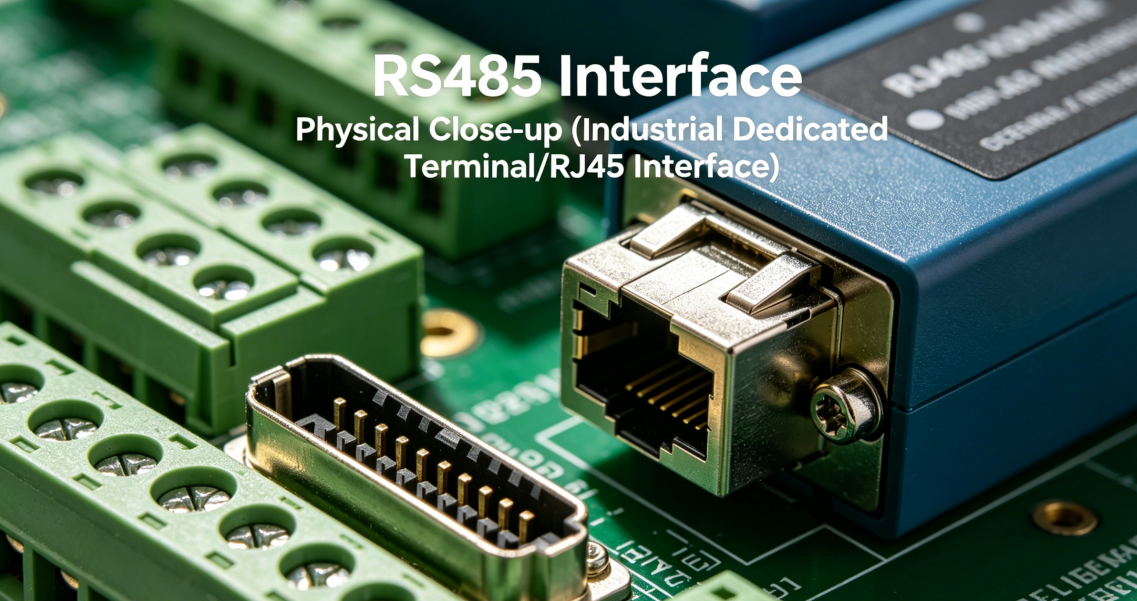
RS485 adopts a "differential signal transmission" mode, which can complete electronic scale data transmission with only two lines A and B. The signal logic is determined by the voltage difference between lines A and B - A-B > +2V is logic 1, and A-B < -2V is logic 0, which is mainly suitable for the complex use scenarios of industrial electronic scales.
The core advantage of this transmission mode is strong anti-interference ability, which is suitable for the complex use environment of industrial electronic scales. However, compared with the RS232 electronic scale interface, the wiring and use threshold is higher, and it is mostly used in specific industrial electronic scale scenarios to meet the needs of multi-device networking and long-distance data transmission of industrial electronic scales.
2. Core Performance Comparison: Distinguish the Differences Between the Two Electronic Scale Interfaces at a Glance
To make it easier for you to compare the differences between the two electronic scale communication interfaces, we have sorted out their core performance parameters, which are clear and easy for electronic scale users and purchasers to check and select accurately:
Comparison Dimension | RS232 Electronic Scale Communication Interface | RS485 Electronic Scale Communication Interface |
Transmission Mode | Single-ended (3-wire system) | Differential (2-wire system) |
Communication Mode | Full-duplex (can send and receive electronic scale data simultaneously) | Half-duplex (can only send or receive electronic scale data at the same time) |
Maximum Transmission Distance | ≤15m (standard working condition, easy to cause electronic scale data distortion beyond distance) | ≤1200m (no repeater, shielded cable transmission, suitable for industrial electronic scales) |
Number of Connected Devices | Point-to-point connection (1:1, one device connected to one electronic scale) | Multi-drop bus connection (1 master and multiple slaves, up to 32 electronic scales in a network) |
Anti-interference Ability | Weak, susceptible to electromagnetic interference from motors, inverters, etc. (suitable for commercial electronic scales) | Excellent, suitable for industrial strong interference environments (suitable for industrial electronic scales) |
Maximum Communication Rate | 20kbps (within 15m, meeting daily electronic scale data transmission needs) | 10Mbps (short-distance and high-speed, suitable for industrial electronic scale data transmission) |
Physical Interface | DB9 female (standard 9-pin, common and easy to identify) | 3-pin/5-pin terminal or RJ45 (industrial dedicated interface, standard for industrial electronic scales) |
Direct PC Connection | Natively supported (directly connected to PC COM port without switching, convenient for electronic scale operation) | Requires USB→RS485 adapter, relatively complex operation (suitable for industrial electronic scale networking) |
3. Application Scenarios: The "Optimal Interface Choice" for Different Electronic Scale Scenarios
There is no "superior or inferior" between the two electronic scale communication interfaces, only "difference in electronic scale scenario adaptation". Combined with daily electronic scale use scenarios and industrial electronic scale use scenarios, we have sorted out the most common application scenarios for you, making it convenient for electronic scale users and purchasers to find the right one and select accurately:
1. RS232 Interface: The "Preferred Interface" for Daily Electronic Scale Scenarios
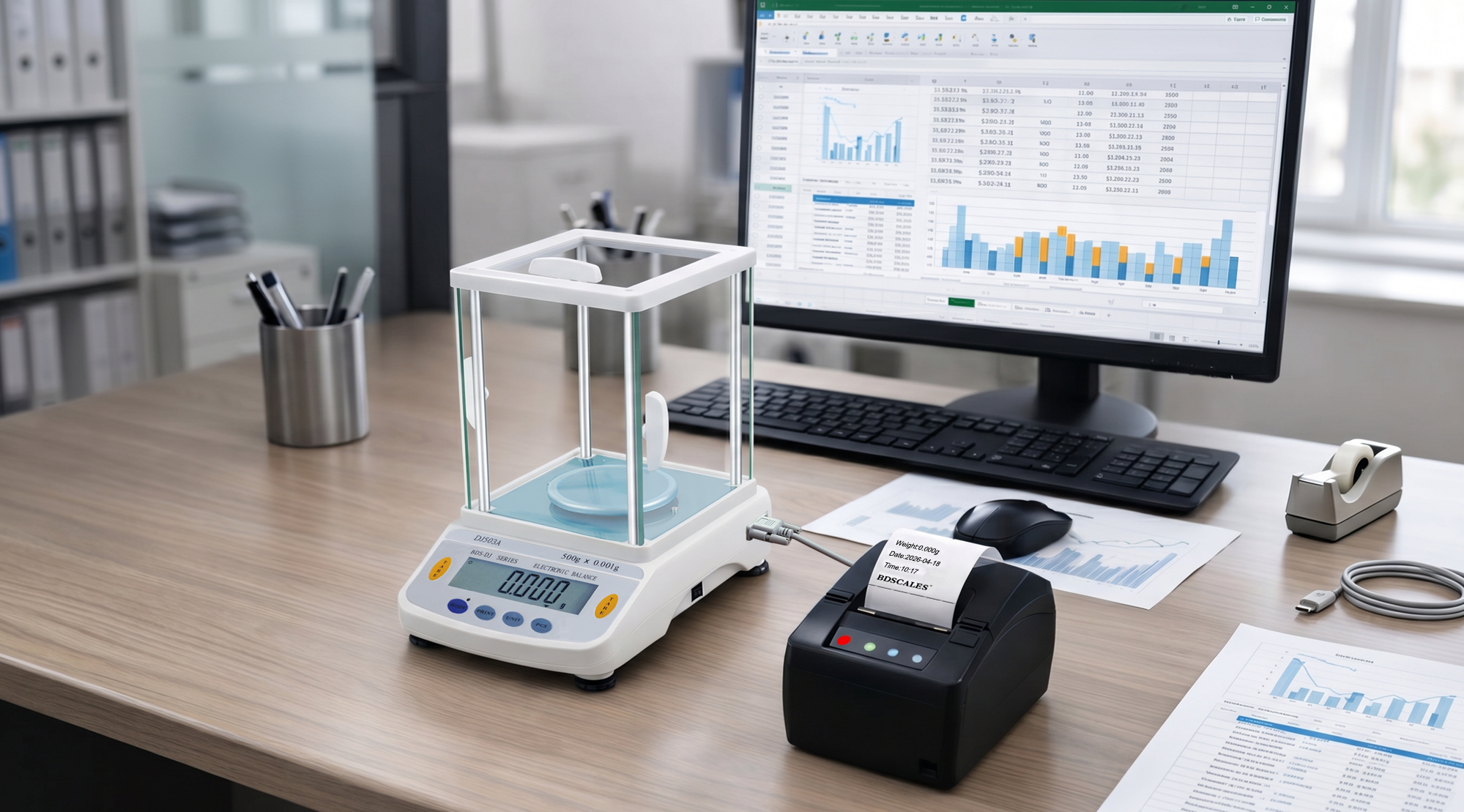
With the advantages of "simplicity, convenience and easy operation", RS232 is widely used in various daily electronic scale weighing scenarios, and is also the standard interface for most civil electronic scales, commercial electronic scales, and precision electronic scales. Common electronic scale scenarios include:
Laboratories: Analytical balances and precision electronic scales, connected to computers and printers to realize electronic scale data entry and report printing;
Commercial retail: Supermarket pricing electronic scales and convenience store platform scales, connected to cash register systems to synchronize electronic scale weighing data;
Small warehouses/offices: Desktop weighing electronic scales and portable electronic scales, local electronic scale data transmission without complex networking;
Individuals/small merchants: Household electronic scales and small weighing electronic scales, simple electronic scale data export and connection to small devices.
Simply put, as long as it is a daily electronic scale scenario with "short-distance, single-device connection", the RS232 electronic scale interface can fully meet the needs, and it is also the most convenient and cost-effective electronic scale interface choice.
2. RS485 Interface: The "Exclusive Interface" for Industrial Electronic Scale Scenarios
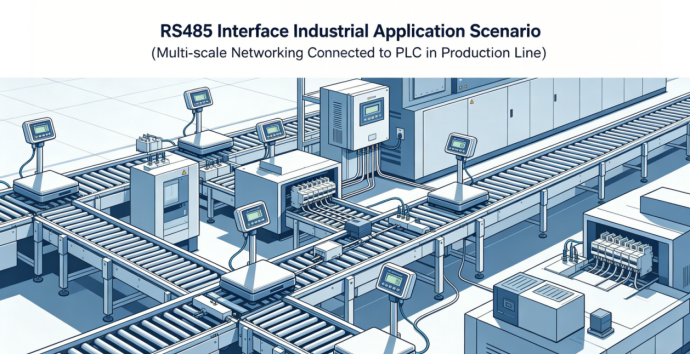
The core advantages of RS485 are "long distance, anti-interference and multi-electronic scale networking", which are mainly used in complex scenarios such as industrial electronic scale production. Common industrial electronic scale scenarios include:
Industrial production lines: Multiple industrial electronic scales are networked and connected to PLCs and industrial computers to realize centralized monitoring of electronic scales and batch electronic scale data collection;
Large warehouses/factories: Long-distance weighing across workshops, such as floor scale electronic scales and assembly line weighing electronic scales, to stably transmit electronic scale data;
Strong interference environment: Factory workshops (with motors, inverters and other equipment) to avoid electronic scale data loss and distortion caused by interference, ensuring the normal operation of industrial electronic scales.
4. Common Misunderstandings Clarified: Avoid Electronic Scale Interface Cognitive Traps
In the daily use of electronic scales, many electronic scale users and purchasers have cognitive misunderstandings about RS232 and RS485 communication interfaces for electronic scales. We will clarify them one by one in combination with common electronic scale use problems:
Misunderstanding 1: RS485 is "better" than RS232 - the two are only suitable for different electronic scale scenarios. RS232 is more convenient in daily electronic scale scenarios, and RS485 is more stable in industrial electronic scale scenarios, with no absolute superiority or inferiority;
Misunderstanding 2: RS385 is an independent electronic scale interface - there is no "RS385" standard, mostly a slip of the tongue or typo of "RS485", which is a common cognitive error of electronic scale interfaces;
Misunderstanding 3: RS232 cannot be connected to a computer - RS232 is a serial port natively supported by computers, which can be used directly by connecting to electronic scales without switching, facilitating electronic scale data transmission;
Misunderstanding 4: The electronic scale interface determines the weighing accuracy - the electronic scale communication interface only affects electronic scale data transmission, not the weighing accuracy of the electronic scale itself. The electronic scale accuracy is determined by the core sensor of the electronic scale.
Through the above popular science, we believe you have clearly understood the core differences between RS232 and RS485 communication interfaces for electronic scales - RS232 is suitable for daily short-distance, single-device connection electronic scale scenarios, convenient and easy to operate, and is the standard configuration for most civil electronic scales, commercial electronic scales, and precision electronic scales; RS485 is suitable for industrial long-distance, multi-electronic scale networking scenarios, with strong anti-interference ability, suitable for complex industrial electronic scale environments.
As a professional electronic weighing instrument manufacturer, BDSCALES has always focused on providing high-precision and high-stability electronic scale products for the majority of users. At present, all series of our electronic scales ( commercial electronic scales, precision electronic scales, industrial electronic scales) support RS232 communication interface, which perfectly adapts to various daily electronic scale scenarios such as laboratories, commerce and small warehouses, meeting everyone's electronic scale data transmission needs.
In addition, if you need supporting RS232 data cables, electronic scale interface adapters and other related electronic scale accessories during the use of electronic scales, you can directly contact our sales team. We will provide you with suitable high-quality electronic scale accessories and professional electronic scale consulting services to ensure the normal and stable operation of your electronic scale equipment.
If you want to know more about electronic scale use skills, electronic scale selection knowledge, or have electronic scale purchase needs ( commercial electronic scales, industrial electronic scales, etc.), welcome to visit our official website:www.bdscales.com to get more professional electronic scale information and electronic scale product details, and we will provide you with one-on-one professional electronic scale services!


